
Sensorial Education in the Montessori Classroom
The sensorial materials in day care in south delhi hauz khas are a key component of the Montessori method of education. These materials in montessori school in hauz khas are designed to help children refine their senses and develop their ability to perceive and understand the world around them. The sensorial materials in montessori education in south delhi are carefully crafted to be aesthetically pleasing, and are designed to encourage children to explore and discover on their own. The sensorial materials in day care in south delhi hauz khas include a wide variety of objects and tools, such as the color tablets, the geometric solids, and the sound boxes. These materials in play school in hauz khas are designed to help children develop their visual, auditory, tactile, and olfactory senses, and to help them understand abstract concepts such as size, shape, and texture.
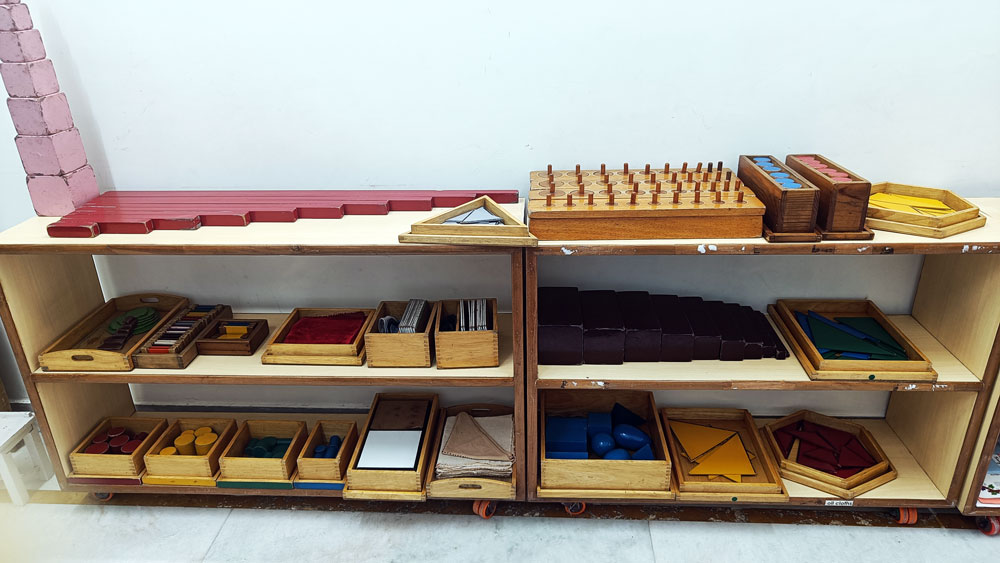
The sensorial materials in play school in south delhi are presented to children in a specific order, from simple to complex, to help children build their skills in a logical and systematic way. Children in montessori education in south delhi are encouraged to explore and experiment with the materials on their own, without any pressure or expectations from the teacher.The sensorial materials are an important way for children to develop their ability to concentrate and focus. By working with the materials in a quiet, focused environment, children learn how to pay attention to details and to develop their powers of observation. The sensorial materials are an integral part of the Montessori method of education, and are an important way for children to develop their senses and their understanding of the world around them. At Crayons Montessori, Sensorial Education gives children structured opportunities to explore qualities they notice through sight, touch and hearing. Montessori materials isolate features such as dimension, colour, shape and texture so children can examine and compare them carefully. Children work with objects that vary in length, weight, sound and surface. By matching, grading and sorting, they learn to identify a specific quality and distinguish it from others.
Montessori Materials for Sensory Exploration
Three familiar materials illustrate this approach. The Pink Tower draws attention to differences in size, Knobbed Cylinders develop awareness of dimension and fit, and Colour Tablets invite children to match and grade colours. Children handle each material, look for a difference and adjust their choices as they work. The defined purpose of each material encourages precision and careful attention.
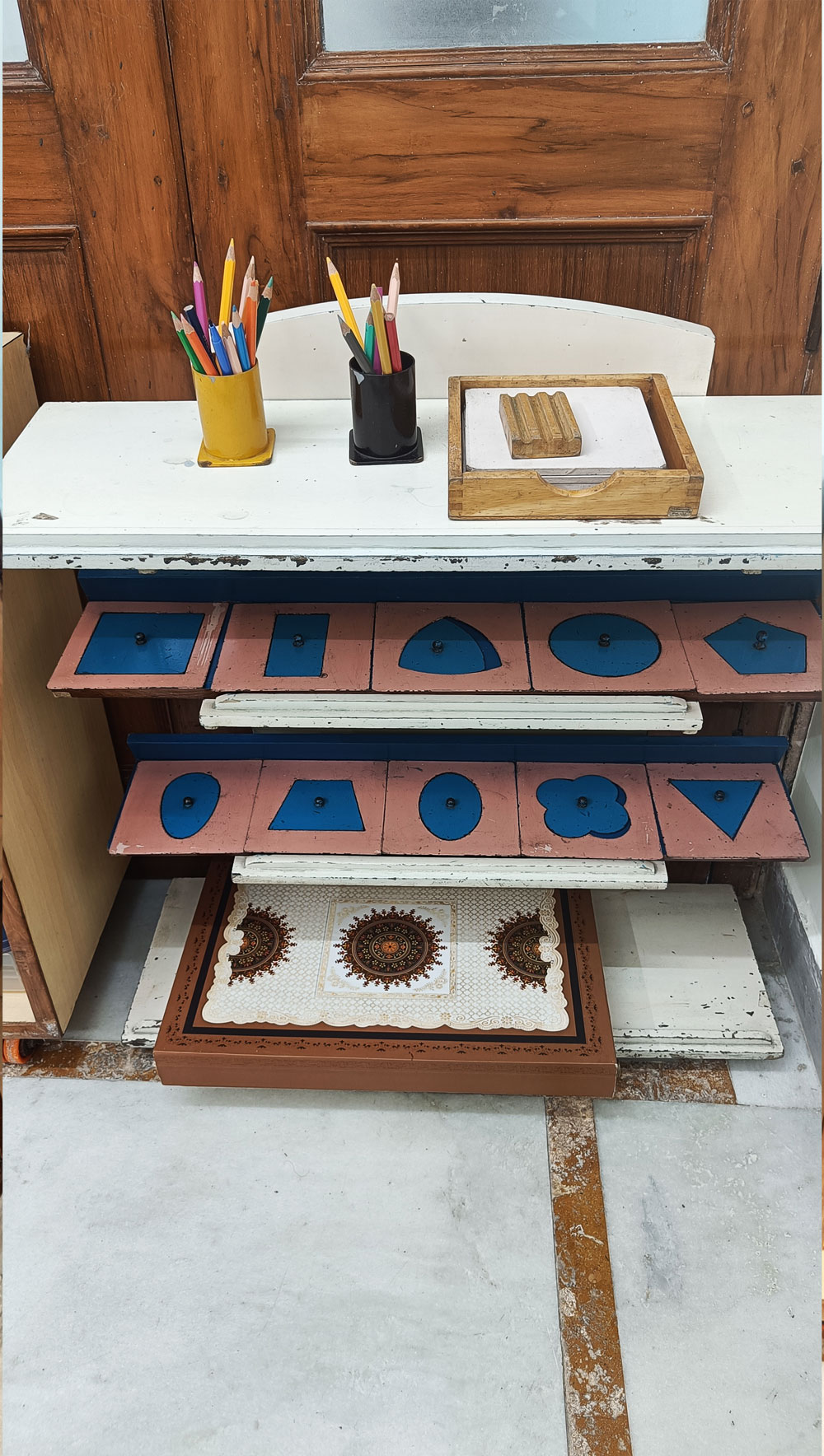
Montessori Materials for Sensory Exploration
Three familiar materials illustrate this approach. The Pink Tower draws attention to differences in size, Knobbed Cylinders develop awareness of dimension and fit, and Colour Tablets invite children to match and grade colours. Children handle each material, look for a difference and adjust their choices as they work. The defined purpose of each material encourages precision and careful attention.
Observation, Comparison, and Classification
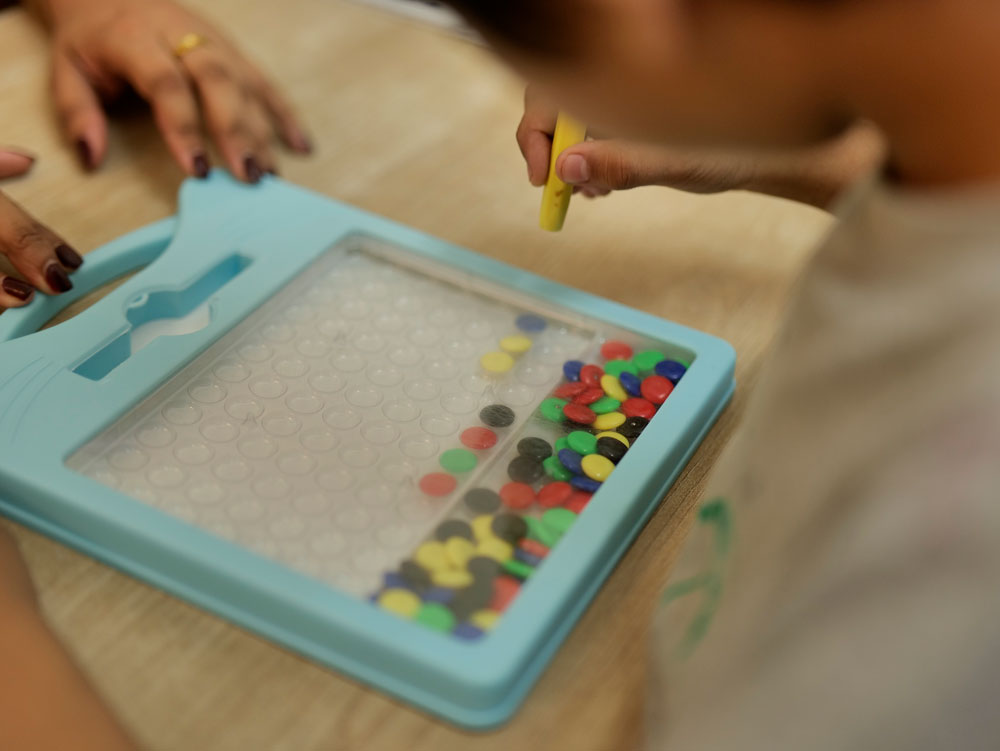
When children sort or group objects by a chosen feature, they practise classification and early reasoning. They learn to compare items using a consistent quality rather than relying on guesswork. Placing and arranging materials also develops spatial awareness and coordination between what children see and how they move.
Concentration and Independent Exploration
A child may repeat an activity to check a choice or refine a movement. This focused work can help sustain attention and support independent engagement. Educators observe each child’s readiness and introduce a new challenge when appropriate. Children are not expected to progress at the same rate.
How Sensorial Learning Supports Other Areas
Sensorial work gives children precise words for describing qualities such as rough and smooth, long and short, or light and heavy. This vocabulary can support later discussion in language and mathematics.
Sensorial Learning at Crayons Montessori
The programme gives children a structured way to turn everyday sensory experiences into clearer observations and descriptions.
Frequently Asked Questions
Sensorial Education uses purposeful materials to help children explore qualities such as colour, shape, size, length, texture, sound, and weight. Children learn by observing and comparing what they can see and handle.
The Pink Tower helps children notice and compare differences in size and dimension. Handling and arranging the cubes encourages visual discrimination, coordination, and careful observation.
Knobbed Cylinders invite children to explore differences in dimensions and fit. Matching cylinders with their corresponding spaces encourages attention to detail and visual discrimination.
Colour Tablets help children observe and compare colours. The activity builds awareness of colour distinctions and encourages careful visual attention.
Our programme includes colour, shape, size, length, texture, sound, and weight. Activities give children opportunities to notice and compare these qualities through hands-on exploration.
Yes. Montessori sensorial activities can engage visual, tactile, and auditory observation, depending on the material and the quality being explored. The aim is to help children refine how they notice differences.
Children often repeat a material as they refine their observations and actions. Returning to a purposeful activity gives them opportunities to sustain attention and become familiar with its sequence.
Sensorial activities develop comparison, classification, order, and awareness of dimensions. These experiences can provide a useful foundation for later mathematical work involving quantity, size, and relationships.
Repetition allows children to observe more carefully, check their choices, and refine their understanding. They can work at a pace appropriate to their readiness.
As children compare qualities such as long and short, rough and smooth, or light and dark, they develop concepts they can later express through language. This links sensory experience with vocabulary and understanding.