
Montessori Language Programme in Hauz Khas, South Delhi
Language in day care in south delhi hauz khas is a crucial component of the Montessori method of education. Montessori classrooms are designed to be rich environments for language development, with a variety of materials and activities that help children develop their spoken language, reading, and writing skills. The Montessori language materials in day care in south delhi hauz khas are designed to help children develop their literacy skills through a variety of hands-on activities. These materials in montessori education in south delhi include the sandpaper letters, which help children learn to recognize the shape and sound of each letter, and the moveable alphabet, which allows children to build words and sentences.
At Crayons Montessori, children develop spoken and written language through listening, speaking, vocabulary, sound work, reading readiness and early writing. Montessori materials let them handle letters and words as they make connections between sounds, symbols and meaning. Activities are introduced in a planned sequence and revisited as skills develop. Children progress from recognising sounds and symbols towards reading and writing simple words.
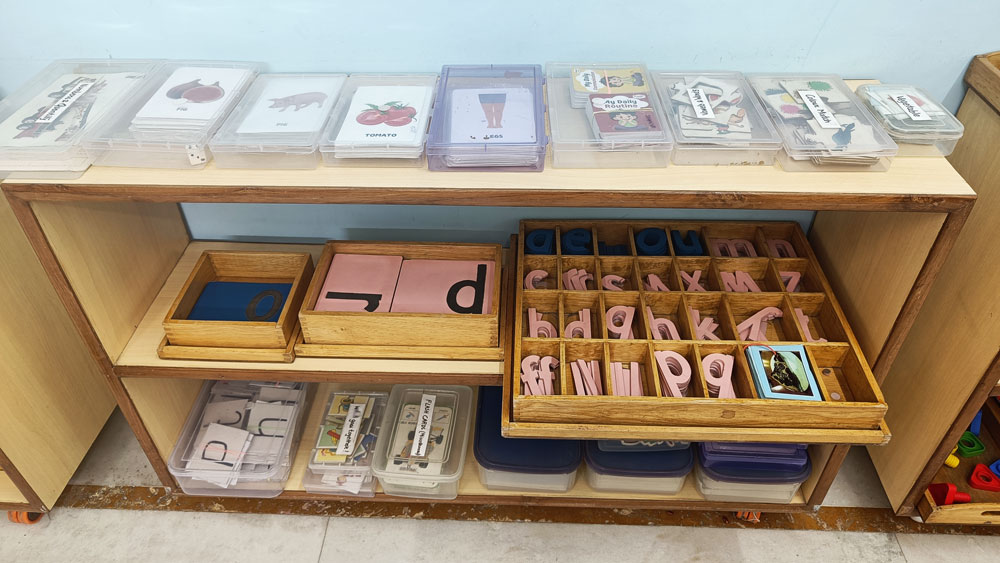
The Montessori approach to language in montessori education in south delhi emphasizes the importance of phonics and the sounds of letters, rather than memorization of sight words. Children are encouraged to use their senses to explore and understand the sounds and shapes of letters and words, which helps them develop strong reading and writing skills. The Montessori language curriculum in day care in south delhi hauz khas also emphasizes the importance of spoken language and communication skills. Children are encouraged to participate in conversations, storytelling, and other language-rich activities in day care in south delhi hauz khas, which help them develop their vocabulary, grammar, and social skills. The Montessori approach to language is designed to help children develop a love of language and communication, which will serve them well throughout their lives.
Letter Recognition and Sandpaper Letters
Children learn letter names and sounds and explore letter shapes by tracing Sandpaper Letters. This tactile experience links the movement of the hand with the written symbol and its associated sound. With practice, children become more familiar with the forms and sounds used in written language.
Phonics and Early Reading
Phonics helps children recognise that spoken words contain individual sounds represented by letters. They practise blending those sounds to read phonetic words, beginning with simple three-letter words and moving towards four- and five-letter words as their skills develop. The sequence becomes more challenging as children gain confidence. Activities are adjusted to their progress so they can develop decoding skills step by step.
Vocabulary, Storytelling, and Comprehension
Stories, conversations and picture discussions place new vocabulary in context. Children are invited to describe objects, retell events and explain what they notice. Discussing characters and the order of events can help children follow a narrative and communicate their understanding.
Word Building and Early Writing
Word-building gives children practice arranging letters to represent spoken words. Early writing extends this work through controlled movements and attempts to form written words. Children can revisit word-building and writing activities to consolidate each step before moving on. As their skills develop, children use language to share questions, describe experiences and communicate ideas with others.
Frequently Asked Questions
Our language approach includes letter names and sounds, Sandpaper Letters, phonics, word building, vocabulary activities, storytelling, conversations, and early writing experiences. These areas support reading, comprehension, and self-expression.
Sandpaper Letters are tactile materials that allow children to trace letter shapes while becoming familiar with their form. The activity helps connect visual symbols, movement, and the sounds associated with letters.
Phonics helps children connect individual speech sounds with letters and practise blending sounds to form words. This gives children a strategy for working out unfamiliar phonetic words. This work reflects language learning in Montessori education, where children practise sounds and symbols through structured, hands-on activities.
Our language sequence starts with simple three-letter phonetic words and progresses towards four- and five-letter words as children’s skills develop. Progress depends on readiness and practice.
Stories and conversations expose children to words in context and encourage listening, comprehension, sequencing, and expression. They also give children opportunities to describe experiences and share ideas.
Vocabulary activities help children connect words with objects, actions, ideas, and experiences. A wider vocabulary can help children understand what they hear and express their own thoughts more clearly.
Yes. Our programme includes early writing experiences along with letter recognition, phonics, and word building. These activities help connect spoken language with written forms.
Recognising sounds helps children understand the parts that make up spoken words. Blending gives them practice combining those sounds, which supports early phonetic reading.
Storytelling, picture reading, conversations, and vocabulary work help children interpret meaning, follow ideas, and express what they understand, alongside sound and word activities.
Talk with your child about everyday experiences, read stories together, discuss pictures, and encourage questions. Regular, relaxed conversation offers useful opportunities to listen and express ideas.