
Children’s Library at Crayons Montessori, Hauz Khas
Libraries are a great initiative in mother and child bonding program in delhi are meant to give an extra boost to your knowledge. This is a place where the entire world can be explored. When it comes to schools, libraries play a very important role while providing academic knowledge to the students. To inculcate reading habit in the early years Crayons Montessori i.e. a pre school in hauz khas has a well-equipped library with books on various topics which include plant life, animal kingdom, transportation and story books.
The Children’s Library at Crayons Montessori in Hauz Khas offers storybooks, picture books, puzzles and other age-appropriate resources in a welcoming space. Children can browse, look at illustrations, listen to stories and talk about what interests them. Reading experiences begin before independent reading. Listening to an adult, pointing to pictures and discussing familiar scenes allow children to engage with books at their own stage.

Storytelling and Picture Reading
Shared stories expose children to language in context and introduce characters, settings and events they may not encounter in everyday life. Listening and discussing what happens helps them follow a narrative and share ideas. Picture reading gives children time to study illustrations, identify familiar objects and describe actions. Simple questions about a picture encourage children to notice details and explain what they see.
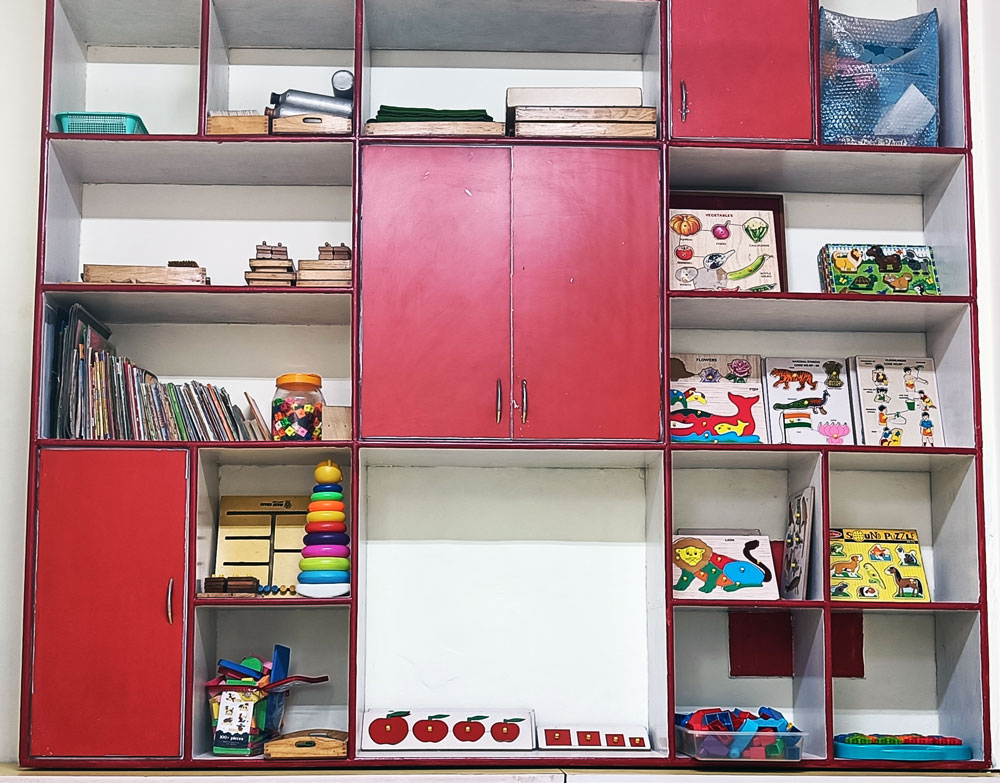
Books, Puzzles, and Educational Resources
Different resources offer different kinds of engagement. Storybooks introduce characters and narrative, picture books invite close observation, and puzzles ask children to examine shapes and work out how pieces fit together. Children can choose a resource, try a puzzle and return to it when they wish. The library is intended for exploration and conversation, not formal lessons at every visit.
Building Vocabulary, Listening, and Concentration
Returning to a familiar book can help children recall events, notice details they missed earlier and become more comfortable with the language of the story. Puzzles invite children to test different possibilities and persist when pieces do not fit. This gives them practice in careful attention and simple problem-solving.
Encouraging Curiosity and a Lasting Interest in Reading
Frequent, relaxed access to books can make reading a familiar and enjoyable part of the day. Families and educators can support this by sharing stories and allowing children to choose what they want to explore. At Crayons Montessori, the library is a space for discovery, imagination and a growing interest in books.
Frequently Asked Questions
1. What can children explore in the Crayons Montessori library?
Our library includes children’s storybooks, picture books, puzzles, and educational resources. These give children opportunities to listen, observe, explore ideas, and engage with age-appropriate material. These experiences are part of the wider learning environment at our Montessori school in Hauz Khas.
Storytelling exposes children to vocabulary and sentence patterns, encourages listening, and helps them follow events and ideas. It also creates opportunities to imagine and discuss people, places, and situations.
Picture reading involves looking closely at illustrations, identifying objects and actions, and talking about what is happening in a picture. It can support observation, vocabulary, comprehension, and expression.
Yes. Listening to stories, discussing illustrations, and connecting pictures with spoken words are meaningful early literacy experiences even before a child reads independently.
Puzzles encourage children to examine shapes and details, compare possibilities, and work out how pieces fit together. They can support concentration and early problem-solving.
Books and stories introduce words in context and provide opportunities to listen, talk, ask questions, and describe pictures. Re-visiting favourite books can help children become familiar with new vocabulary.
Stories introduce characters, events, and places beyond a child’s immediate experience. Illustrations and storytelling invite children to picture situations, wonder what might happen, and discuss ideas.
Repeated reading helps children become familiar with the sequence and language of a story. Each visit may also help them notice new details or express their understanding more confidently.
Set aside relaxed time to look at books together, invite your child to describe pictures, and talk about favourite characters or events. Let the experience be enjoyable rather than testing the child.
No. The library can support listening, imagination, observation, vocabulary, concentration, and independent exploration. Books and puzzles offer varied experiences that complement other areas of learning.